

When you observe a plant, can you imagine how it perceives its ecosystem? Despite appearing to be a defenseless living organism, it is actually equipped with an advanced genetic defense system. From microscopic pathogens to harsh environmental stressors, plants rely on an intricate network of genetic defenses that allows them to survive, adapt, and thrive. These mechanisms are encoded directly into their DNA, forming a natural barrier that is far more complex than it appears at first glance.
Understanding these systems not only satisfies scientific curiosity; it also provides growers with practical tools to strengthen their crops, reduce losses, and cultivate with greater resilience and intention.
Innate Immunity in Plants

Unlike animals, plants do not possess an adaptive immune system. Instead, they rely entirely on innate immunity—a rapid, highly specialized response that enables them to detect and react to a wide variety of pathogens. This system recognizes pathogen-associated molecular patterns (PAMPs) through receptors located on the plant’s cell surface. When these patterns are detected, the plant initiates an immediate defensive response intended to contain the threat before it spreads.
This response involves a coordinated network of surface receptors and intracellular mechanisms that work together to maintain the plant’s protection.
Pattern Recognition Receptors: The First Line of Defense
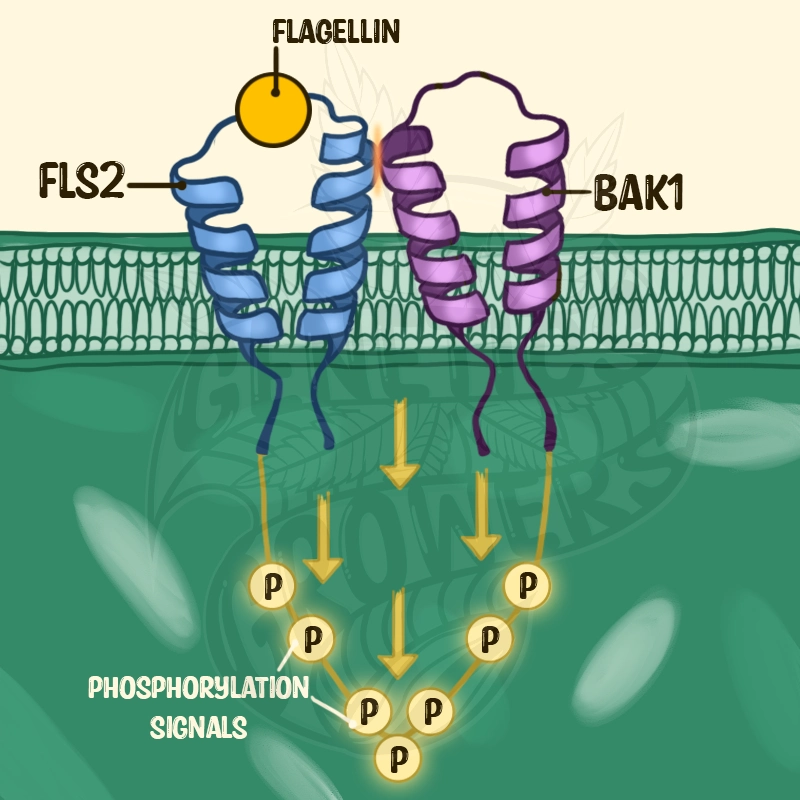
Pattern Recognition Receptors (PRRs) serve as early-warning sensors. Their core function is to identify specific molecular signatures of pathogens and activate downstream defense responses.
Receptors such as FLS2 and EFR in Arabidopsis are well-documented examples. They detect bacterial components like flagellin or elongation factor Tu, then activate signaling cascades that turn on defense-related genes. Co-receptors such as BAK1 further amplify these signals, ensuring that the plant responds rapidly and effectively.
Intracellular Signaling Pathways: Beyond the Surface
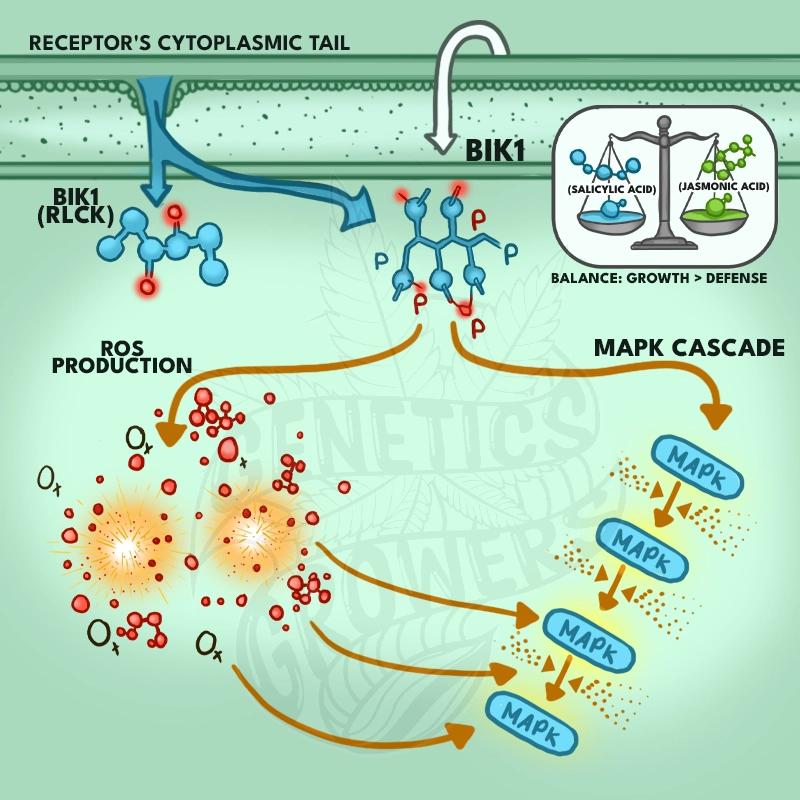
After a PRR detects a pathogen, the signal is transmitted internally through molecules such as receptor-like cytoplasmic kinases (RLCKs), including BIK1. These elements propagate the signal toward the cell’s interior, activating more complex defensive responses.
This signaling cascade results in the production of reactive oxygen species (ROS) and the activation of mitogen-activated protein kinases (MAPKs), both essential for coordinating immune defenses. Plant hormones—particularly salicylic acid and jasmonic acid—help regulate the balance between growth and defense, ensuring the plant responds effectively without compromising development.
Plants vs. Animal Immunity
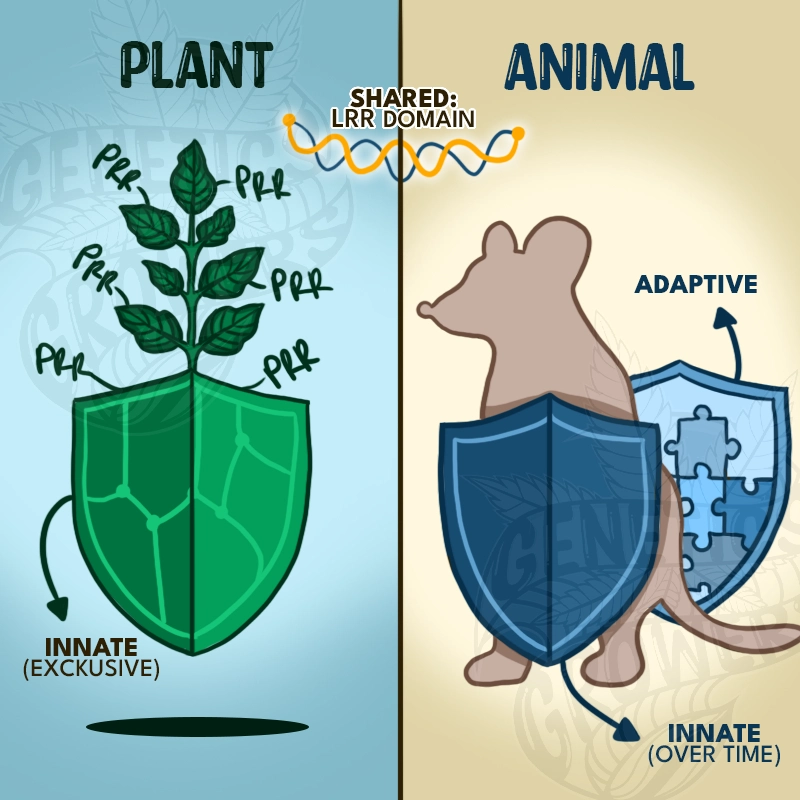
Although plants and animals both rely on innate immunity, the way these systems evolved differs considerably. Plants depend exclusively on innate immunity, which has led them to develop an exceptionally diverse array of receptors and defense pathways suited to their stationary lifestyle and environmental constraints.
Some structural parallels exist—such as leucine-rich repeat (LRR) domains—but plants have uniquely adapted these features to meet their own biological challenges.
Understanding the genetics behind plant immunity not only enhances our knowledge of plant biology but also opens avenues for developing crops with improved disease resistance and environmental stress tolerance. As we continue to explore these mechanisms, the potential for biotechnological advancements in agriculture becomes increasingly promising. For more insights into plant genetics and immunity, explore our resources at Genetics Growers.
R-Genetic Factors Influencing Plant Immunity
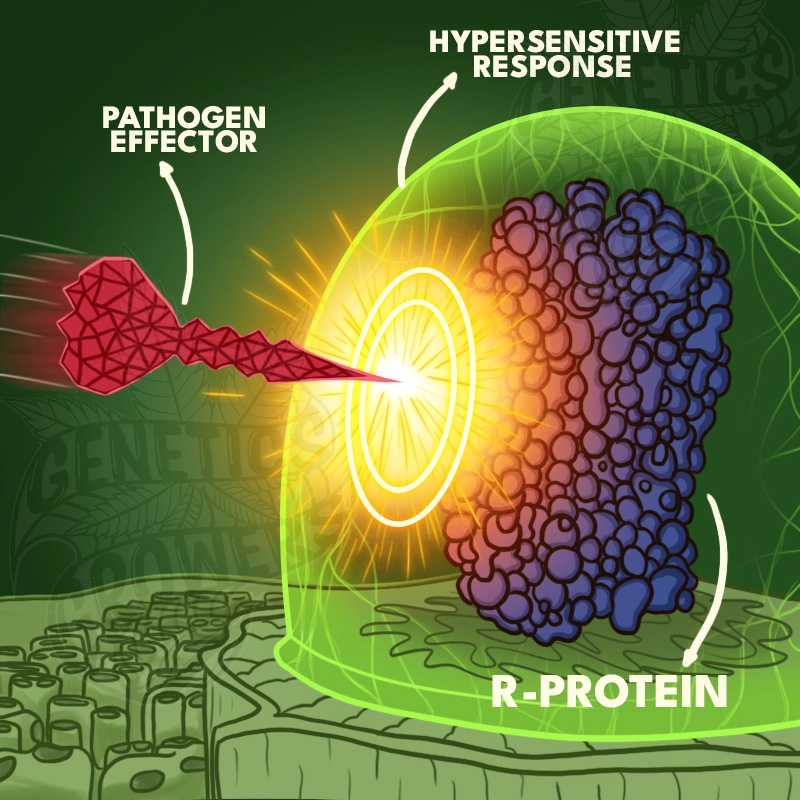
Resistance Genes, or R-genes, are central to plant immune responses. These genes encode proteins capable of recognizing specific pathogen-derived molecules known as effectors. When an R-gene detects an effector, it triggers a targeted and robust immune response.
A widely studied example is the RPS2 gene in Arabidopsis, which detects the bacterial effector AvrRpt2 and initiates a localized immune reaction to stop the pathogen’s spread. Such interactions highlight the precision with which R-genes safeguard plant health.
Genetic Engineering: Building Stronger and More Resilient Crops
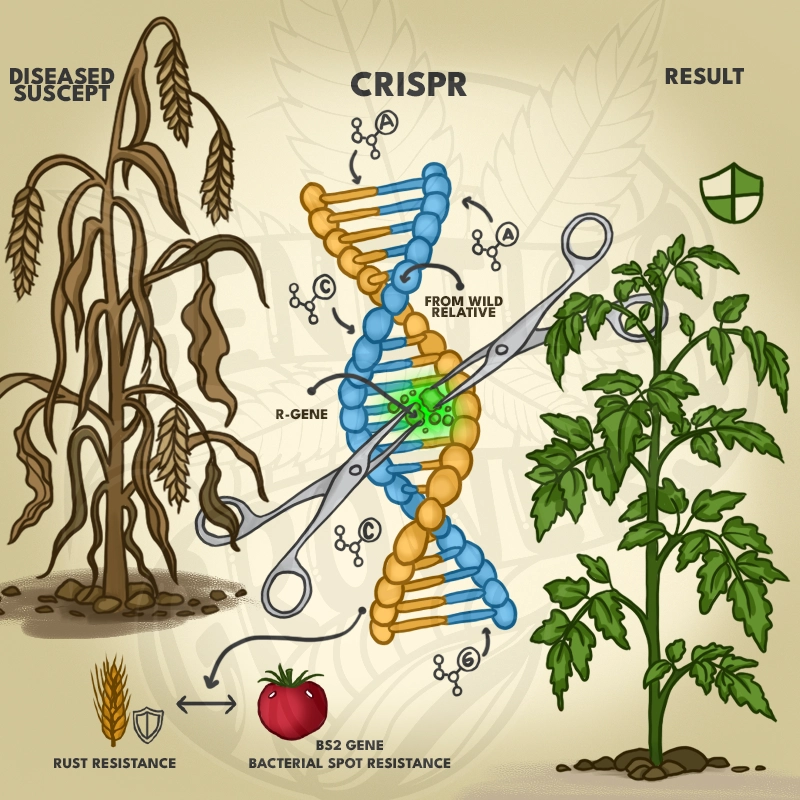
Advances in biotechnology have transformed approaches to plant immunity. Through genetic engineering and tools such as CRISPR, researchers can introduce, modify, or optimize R-genes to enhance disease resistance.
Examples include wheat varieties strengthened with R-genes from wild relatives to resist rust diseases and tomatoes engineered with the Bs2 gene from pepper to mitigate bacterial spot disease. These innovations are paving the way for resilient, productive, and more sustainable agricultural systems.
For more insights into genetic factors influencing plant immunity and to explore how you can apply this knowledge to your cultivation strategies, visit Genetics Growers.
Environmental and Developmental Factors in Plant Immunity
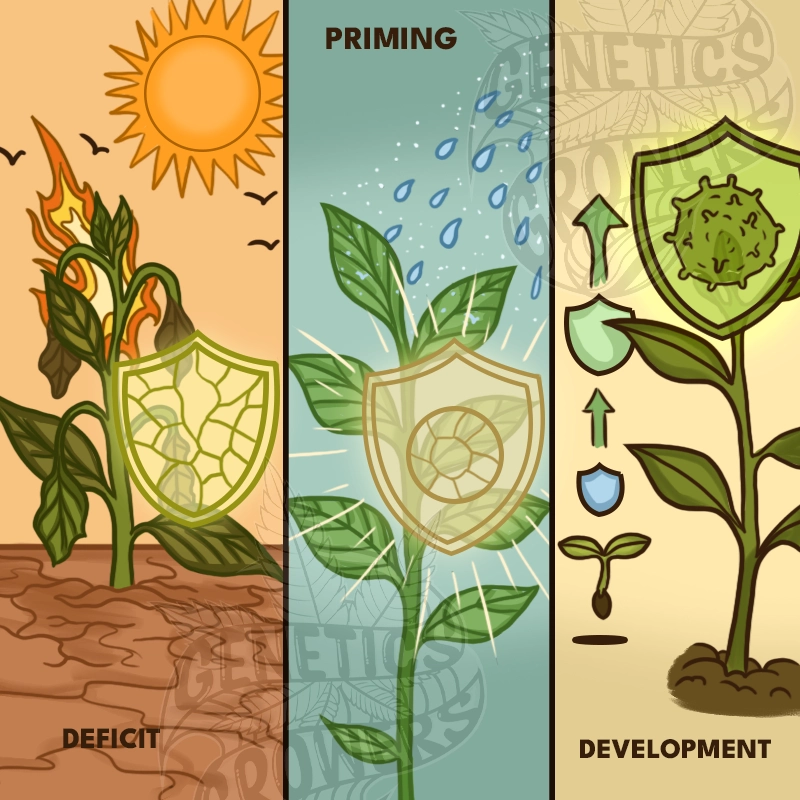
A plant’s immune capacity is shaped not only by genetics but also by environmental conditions and developmental stage.
Stressors such as drought, extreme temperatures, or nutrient deficiencies can weaken immunity. For instance, drought elevates levels of abscisic acid, a hormone that modulates immunity but may suppress certain defense pathways.
Conversely, mild stress can induce priming, a state that prepares plants to respond more quickly and effectively to future attacks. Research on Arabidopsis has shown that low-level salt stress can enhance resistance to bacterial pathogens.
Developmental stage also plays a significant role. Seedlings often prioritize rapid growth over defense, while mature plants activate more robust protective responses, including elevated expression of ROS-related genes.
What This Means for You as a Grower

By understanding plant immunity, growers can make informed decisions regarding:
- Selecting varieties with stronger natural resistance.
- Anticipating how environmental stressors impact plant health.
- Adjusting cultivation practices to support immune responses.
- Incorporating biotechnology-based solutions as they become available.
This knowledge enables more resilient, efficient, and intentional growing strategies.
CONCLUSION
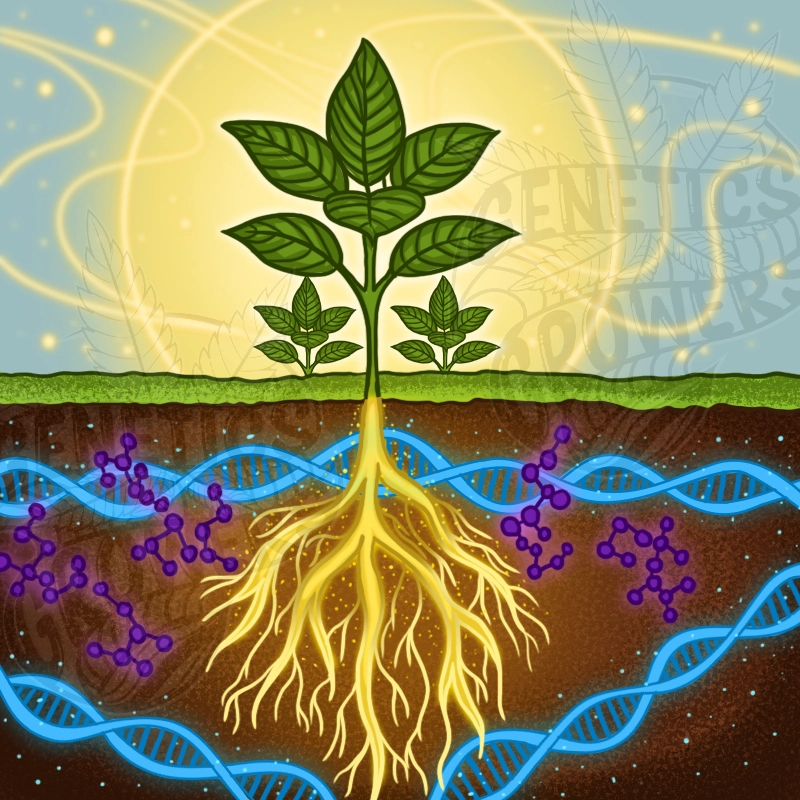
Plant immunity is a multifaceted and deeply fascinating field. Understanding its genetic foundations allows growers and researchers to approach cultivation with greater clarity and confidence. As innovations in plant biotechnology continue to advance, the vision of resilient and sustainable crops becomes increasingly attainable.
To continue exploring the science behind plant immunity and the genetics that shape modern cultivation, you can consult additional articles within Genetics Growers. If you found these insights valuable, consider revisiting related topics or sharing your experiences with plant resilience and stress responses. Your engagement helps strengthen a community committed to informed and sustainable growing practices.
As we continue to explore these genetic pathways, the potential for biotechnological advancements in agriculture becomes increasingly promising. We invite you to dive deeper into this fascinating topic by exploring additional resources on our website, Genetics Growers. Join our community to share insights, ask questions, and stay updated on the latest in plant genetics and immunity. Together, we can build a more resilient agricultural future.