

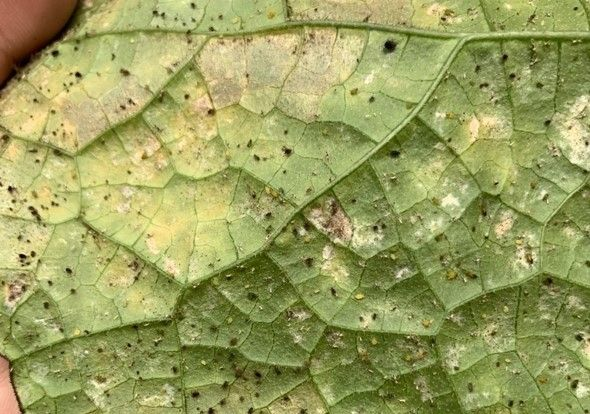
Have you ever inspected your plants, only to discover mysterious silvery or bronze-colored spots? Tiny black dots that seem to move? If so, you may be witnessing the devastation of a pest as minuscule as it is destructive.
An invisible vampire is attacking your garden, your vegetable patch, or your indoor grow at this very moment: the Thrips (or “Thysanoptera”). Fortunately, this article has been created to help you get it under control.
We’ll reveal EVERYTHING you need to know about this feared pest. You’ll also learn how to identify its terrifying signs, the unfailing methods of prevention, and the exact protocol to eliminate them once and for all.
Have you encountered any of these thrips species in your garden? Share your experiences and insights in the comments below!
Anatomy of Terror: Why They are So Dangerous
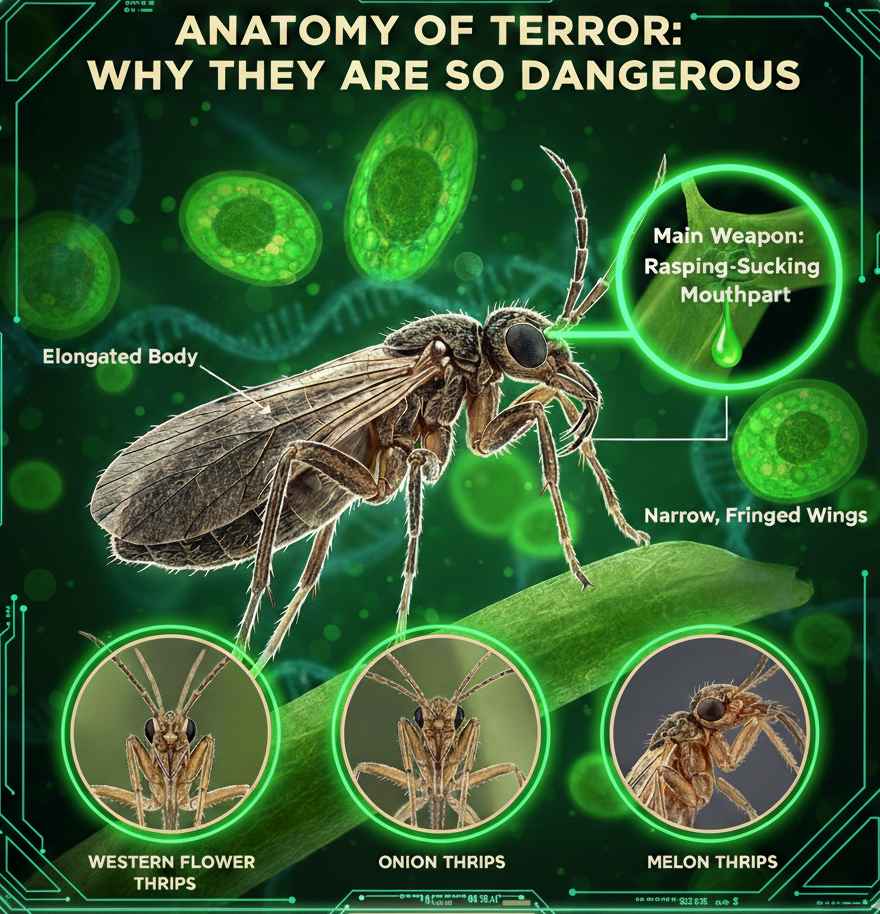
Thrips are minuscule insects, measuring only 1–2 millimeters in length, making them nearly invisible until the damage is already severe.
- Appearance: These pests have elongated bodies and narrow wings fringed with hairs (hence their name, derived from the Greek thysanopteros, meaning “fringe-wing”).
- Main Weapon: What truly makes them dangerous is their rasping-sucking mouthpart. They act like microscopic vampires, rasping the surface of plant cells and then sucking out the sap and cellular contents.
With over 6,000 known species, the most common in crops are:
- Western Flower Thrips (Frankliniella occidentalis).
- Onion Thrips (Thrips tabaci).
- Melon Thrips (Thrips palmi).
The Life Cycle: A Rapidly Growing Threat
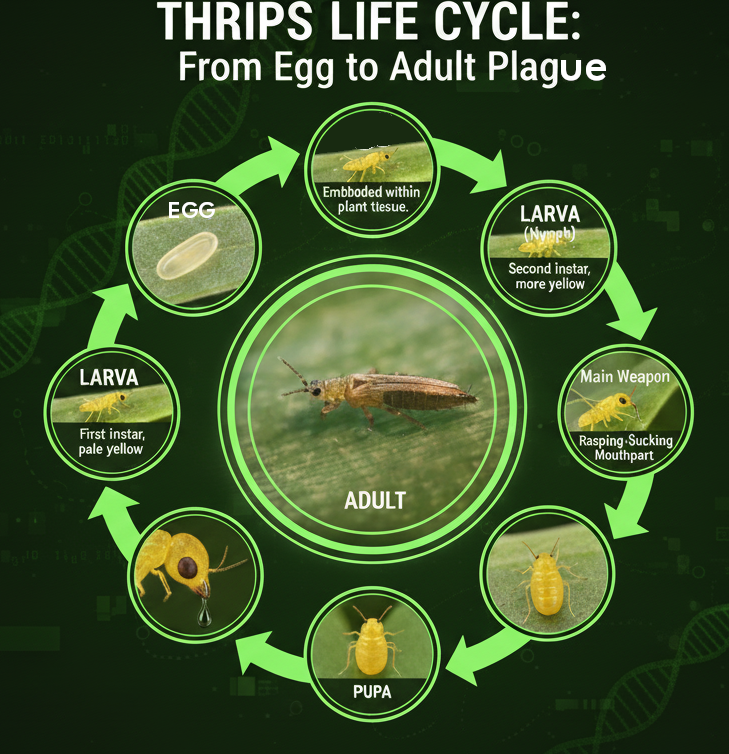
The main problem with thrips is their capacity for explosive reproduction:
- Speed: In warm conditions, their life cycle (from egg to adult) is completed in just 2–3 weeks.
- Proliferation: A single female can lay up to 80 eggs, usually embedded in the soft tissue of leaves.
- Hidden Stage: The pupal stage often occurs in the soil or leaf litter, protecting them from many foliar treatments.
This quick succession of generations means that a small infestation can explode in a matter of days.
They Don’t Discriminate: Plants at Risk
Thrips attack an immense variety of plant species indiscriminately. No plant is entirely safe!
| Type of Crop | Common Examples of Attack |
| Indoor Plants | Pothos, Monstera, Ficus, Orchids (especially vulnerable), and African Violets. |
| Outdoor Vegetable Gardens | Tomatoes, Peppers, Eggplants, Cucumbers, Onions, Garlic, and Strawberries. |
| Indoor Cultivation | A recurring pest in cannabis, where they damage leaves, new shoots, and can severely affect bud quality. |
“Stay connected with Genetics Growers! Follow us on social media for daily tips, stunning plant photography, and community discussions.”
👉 https://www.instagram.com/genetics.growers/
👉 https://www.youtube.com/channel/UC1RyCEDvvNp71-frEQYufwA
Warning Signs: How to Identify the Enemy
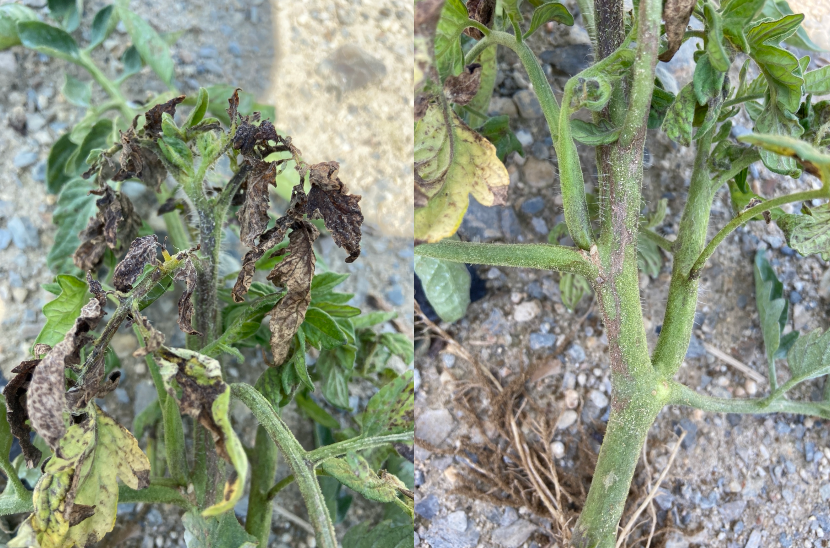
Early detection is your most effective weapon. Look for these four key signs to confirm a Thrips infestation:
- Silvery or Bronze Spots (Chlorosis): The classic damage. When thrips suck the sap, leaves develop a discolored, silvery, or bronzed appearance.
- Black Dots (Excrement): Tiny drops of excrement left behind after feeding. If you notice these dots, the pest is currently active.
- Deformed New Leaves: Thrips love tender new growth. If new leaves emerge curled, deformed, or patchy, suspect Thrips.
- Rapid Movement: When you shake or touch the plant, you may spot small, elongated, active insects moving across the leaves.
The Professional Trick: Quick Confirmation
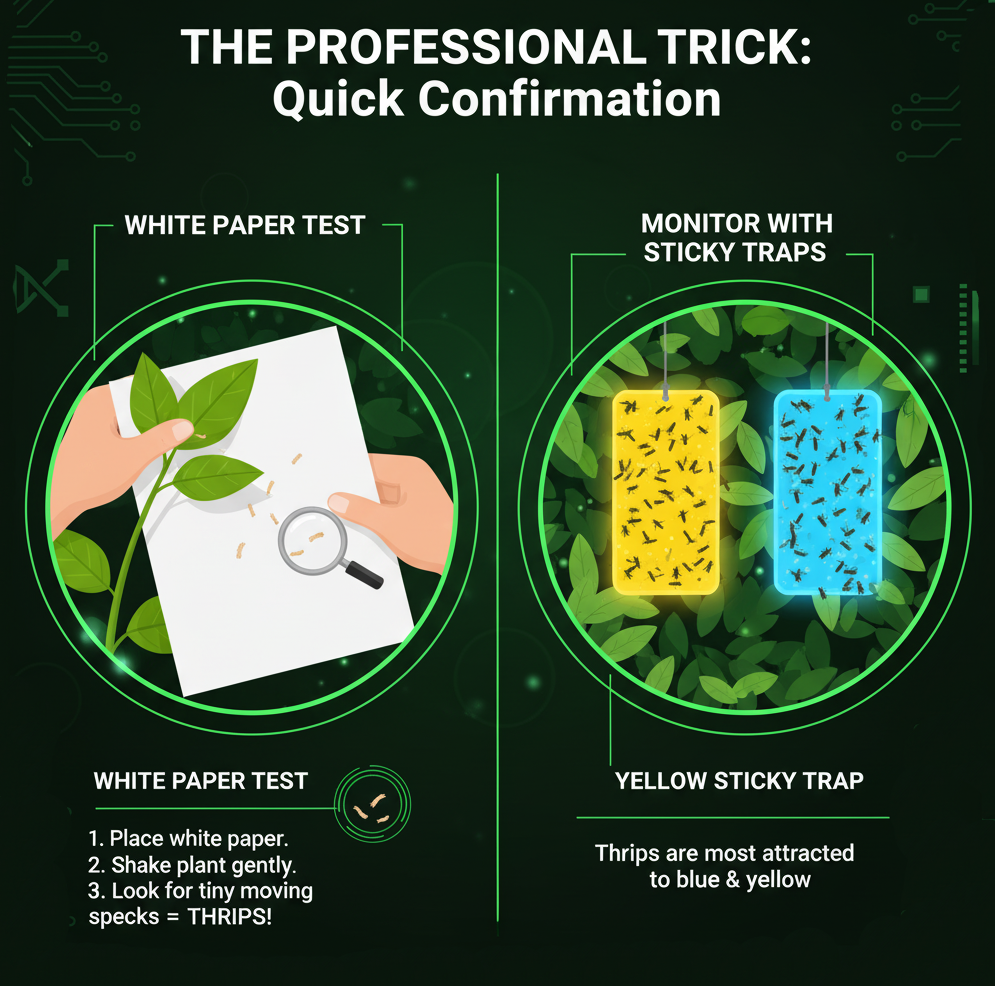
For more experienced gardeners, the white paper test is foolproof:
- Place a white sheet of paper beneath the suspicious leaves.
- Gently shake the plant.
- If you see tiny, elongated specks moving on the paper, you have a thrips infestation.
You can also use blue or yellow sticky traps (the colors that attract them most) to monitor the population.
“Want more in-depth guides and exclusive content? Join our community by subscribing to our newsletter today!”
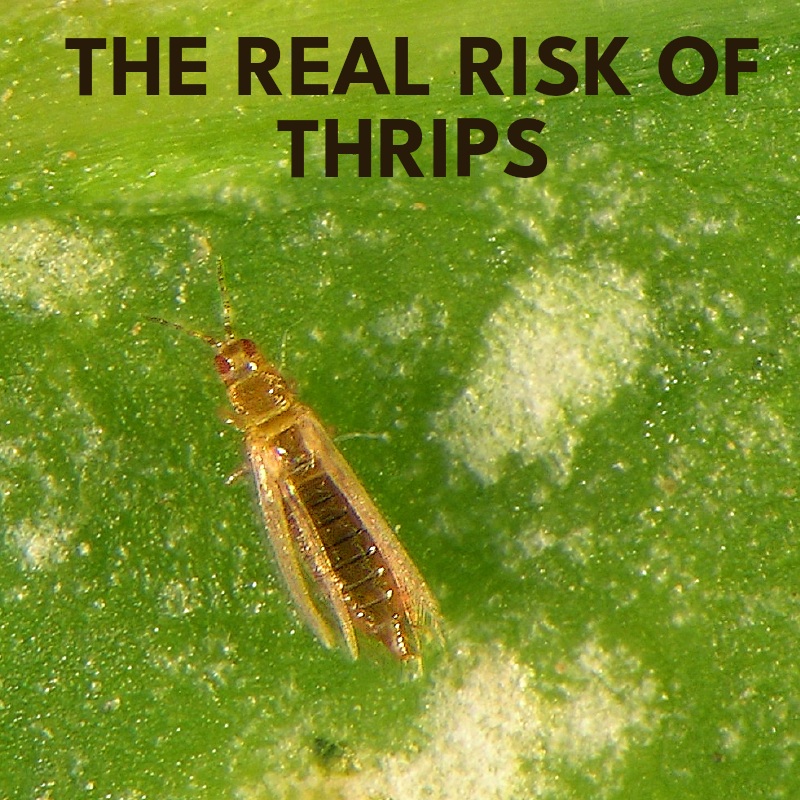
Deep Damage: The Real Risk of Thrips
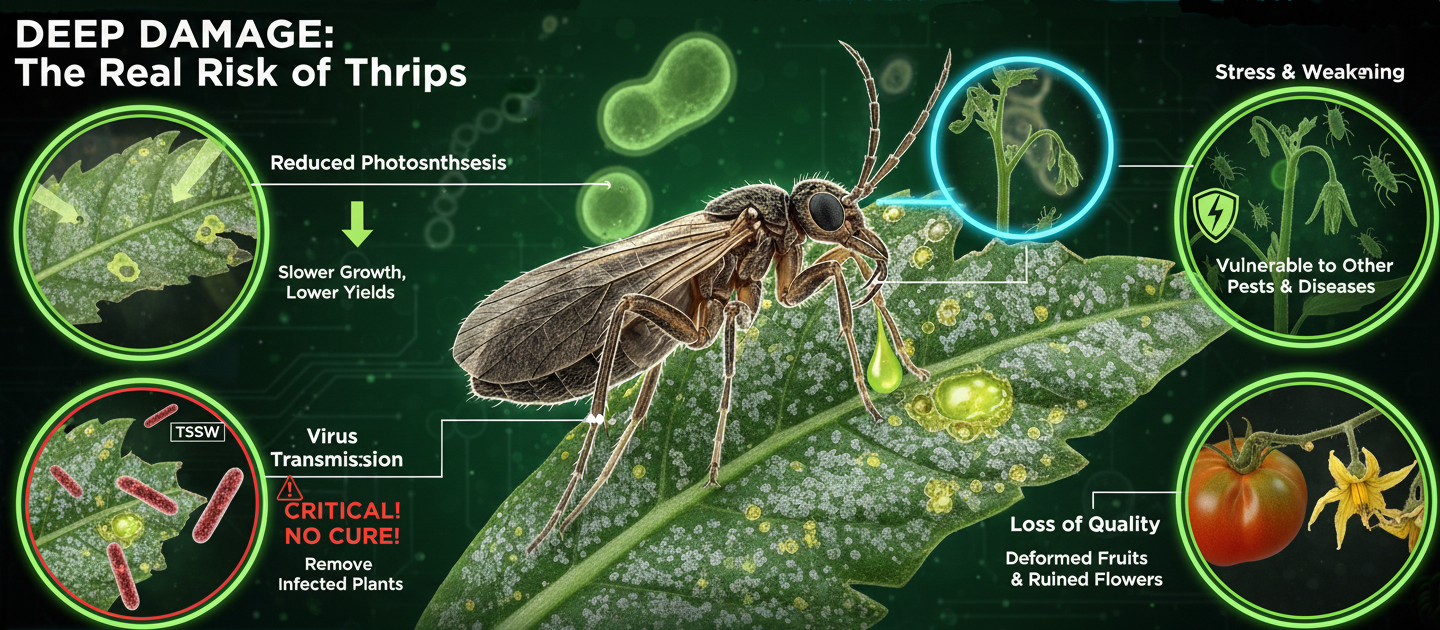
Thrips damage is not just cosmetic; it compromises the plant’s overall health and, ultimately, your harvest:
- Reduced Photosynthesis: Every scraped cell is one less performing photosynthesis, resulting in slower growth and lower yields.
- Stress and Weakening: Stressed plants become more vulnerable to other pests and fungal diseases.
- Virus Transmission: This is the CRITICAL damage. Thrips are vectors for devastating viruses such as TSWV (Tomato Spotted Wilt Virus), which have no cure. Once infected, the plant must be removed to prevent the virus from spreading.
- Loss of Quality: In both edible and ornamental crops, thrips damage can cause deformed fruits and ruined flowers.
Prevention Strategy: The Best Defense
Consistent prevention is the key to avoiding “terror in your crops.” Follow this five-step protocol:
- Rigorous Weekly Inspection: Check the undersides of leaves and new shoots every week.
- Quarantine New Plants: NEVER introduce a new plant directly. Keep it isolated for at least two weeks.
- Physical Barriers: Use insect-proof netting on greenhouse vents or floating row covers to protect vulnerable outdoor crops.
- Constant Monitoring: Keep blue or yellow sticky traps in place to detect infestations early.
- Companion Planting: Aromatic plants such as basil, marigold, and garlic can act as natural repellents.
“What are your go-to prevention methods for thrips? Share your wisdom with fellow growers in the comments section!”
Treatment and Elimination: Step-by-Step Protocol
If prevention fails and you’re already facing an infestation, it’s time to act fast. Use this tiered protocol, starting with mechanical control and progressing to the most potent organic solutions.
Infestation Level | Product/Method | Recommended Application | Key Detail |
Level 1 (Mechanical) | Strong Water Spray/Shower | Apply to the undersides of leaves every 2–3 days for 2 weeks. | Only for very mild infestations. |
Level 2 (Organic Basic) | Potassium Soap (Insecticidal Soap) | Spray generously, covering the entire plant. Repeat every 3–5 days. | Works by contact. Full coverage is critical. |
Level 3 (Organic Standard) | Neem Oil | Apply every 7 days. Add a few drops of soap as an emulsifier. | Interrupts feeding and reproduction. Avoid applying in direct sunlight. |
Level 4 (Potent Organic) | Spinosad | Follow the manufacturer’s instructions. Apply at dusk. | Highly effective, often the last organic resort. |
Biological Control: A Sustainable Solution
One of the most effective approaches, especially in enclosed environments or greenhouses, is biological control. The release of natural predators that hunt and feed on the Thrips:
- Predatory Mites: Amblyseius cucumeris and Neoseiulus cucumeris. Ideal for controlling larval stages.
- Minute Pirate Bug: Orius insidiosus. A more aggressive predator that feeds on both larvae and adult Thrips
Conclusion: Protect Your Plants from the Invisible Vampire
Thrips may be tiny, but their impact can be devastating. By understanding their life cycle, recognizing the warning signs, and implementing a consistent prevention and treatment protocol, you can protect your plants from these invisible vampires. Remember, early detection and swift action are your best allies in maintaining a healthy and thriving garden.
Happy Halloween🎃 from the Genetics Growers team! May your plants be spooky-free and your harvests abundant.