the power of terpenes: the science and potential of nature's pharmacy

Have you ever wondered why a walk through a pine forest feels so invigorating or why lavender is so deeply relaxing? The answer lies in terpenes—organic compounds that play a vital role in the life of plants. These aromatic molecules are responsible not only for nature’s distinctive scents, but also for many of its most powerful therapeutic properties.
At Genetics Growers, we explore the science behind terpenes and their expanding role in cultivation and wellness. Whether you are an experienced grower or just beginning your journey, understanding terpenes can transform the way you perceive plants and their benefits. From the refreshing alpha-pinene found in conifers to the calming linalool present in lavender, terpenes reveal a complex and highly functional natural system.
Far from being simple fragrances, terpenes play an essential role in plant survival and ecological interaction. Research increasingly highlights their importance in plant defense as well as their potential effects on human health. In plants, terpenes help repel pests, attract pollinators, and even communicate stress signals to nearby vegetation. In humans, they have been associated with anti-inflammatory, analgesic, and anxiolytic properties, positioning them at the intersection of botany, medicine, and sustainable cultivation.
In this article, we explore how terpenes function within plants, the different types found in nature, and the medicinal alternatives they offer. Whether your goal is to strengthen plant resilience or to better understand natural wellness solutions, terpenes may be the key to unlocking a healthier and more balanced relationship with nature.
What Are Terpenes and How Do They Function in Plants?
Terpenes are organic compounds composed primarily of carbon and hydrogen, forming the aromatic foundation of many plant species. Beyond their pleasant scents and flavors, these compounds serve critical biological functions that support plant growth and survival.
One of the most important roles of terpenes is their participation in ecological interactions. Plants release specific terpenes to attract pollinators, ensuring reproduction, while simultaneously producing others to deter herbivores and pathogens. When under attack, some plants emit terpene signals that attract natural predators of invading insects, creating an efficient, chemical-based defense system. Scientific research confirms that terpenoids play a central role in plant resistance, defense signaling, and ecological adaptation (Kamjunke & Huber, 2023)
Even more remarkably, plants can use terpenes to communicate with one another. Certain airborne terpenes alert neighboring plants to potential threats, prompting them to activate their own defense responses. This sophisticated form of chemical communication highlights the complexity of plant ecosystems and underscores the essential role terpenes play within them.

Exploring Terpene Types and Their Sources
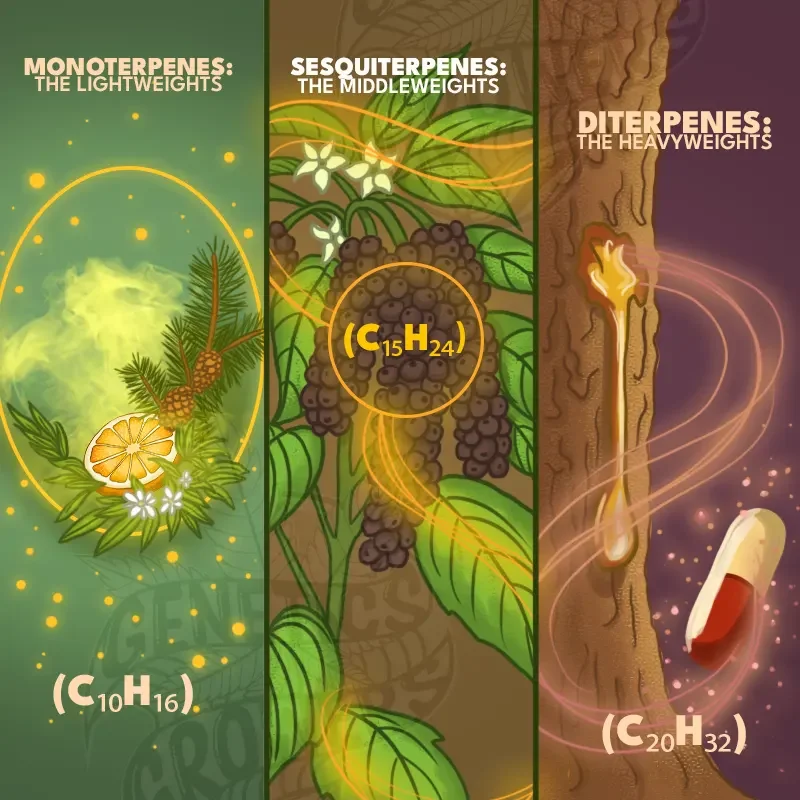
Terpenes are classified according to the number of isoprene units they contain, a structure that determines their volatility, stability, and biological activity. Understanding these categories helps clarify their wide-ranging applications in both nature and medicine.
Monoterpenes: The Lightweights
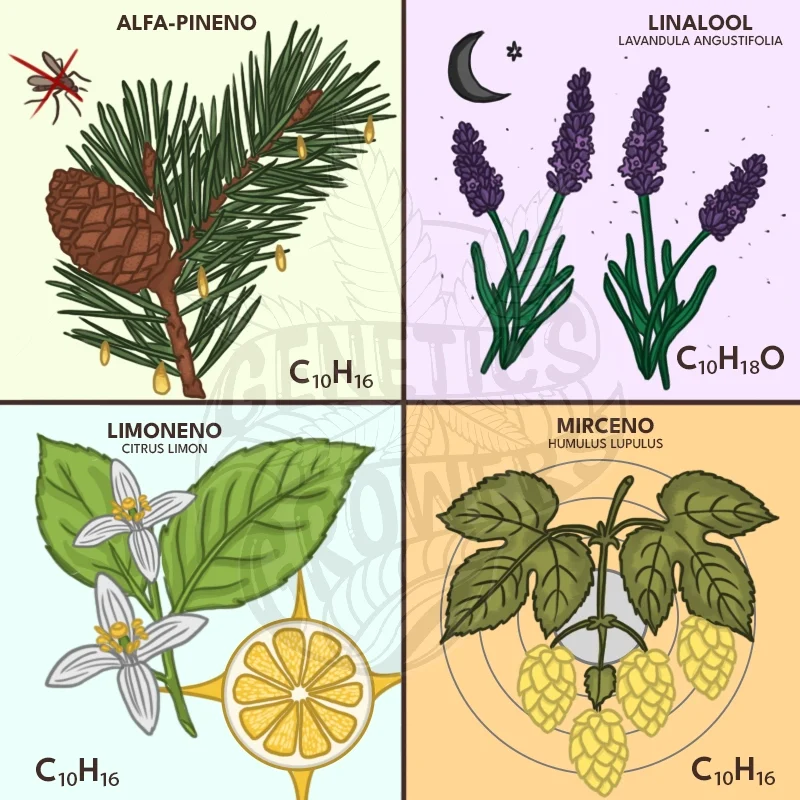
Monoterpenes consist of two isoprene units (C₁₀H₁₆) and are highly volatile, making them common components of essential oils. Well-known examples include limonene, abundant in citrus fruits and associated with uplifting effects, and alpha-pinene, found in pine trees and valued for its insect-repelling properties. These compounds are frequently used in aromatherapy and are being studied for their antioxidant and anti-inflammatory potential.
Sesquiterpenes: The Middleweights
Formed from three isoprene units (C₁₅H₂₄), sesquiterpenes are less volatile and more stable. One notable example is beta-caryophyllene, present in cloves, black pepper, and rosemary. This terpene is particularly unique due to its ability to interact with cannabinoid receptors in the human body, suggesting possible applications in pain management, inflammation control, and mood regulation.
Diterpenes: The Heavyweights
Diterpenes contain four isoprene units (C₂₀H₃₂) and are commonly found in plant resins. Some diterpenes serve as precursors to important pharmaceutical compounds. For example, taxadiene is a key precursor to taxol, a widely used anti-cancer drug. Ongoing research continues to explore diterpenes for their potential roles in cardiovascular, neurological, and immune-related therapies.
Medicinal Uses of Terpenes: A Promising Frontier
Interest in the medicinal properties of terpenes has grown rapidly in recent years. One of the most compelling concepts associated with these compounds is the entourage effect, which suggests that terpenes can work synergistically with other plant compounds—such as cannabinoids—to enhance therapeutic outcomes. According to Russo and Marcu (2024), this interaction may influence the overall efficacy of medicinal cannabis products by modulating pharmacological responses (MDPI)
Scientific studies indicate that many terpenes possess anti-inflammatory, analgesic, antimicrobial, and anxiolytic properties. Research reviewing terpenes and terpenoids found in essential oils highlights their wide-ranging biological activities and potential applications in human health (Sharopov et al., 2022)
Historically, terpenes have played a central role in traditional medicine, often delivered through essential oils. Lavender, rich in linalool, has long been used to promote relaxation and improve sleep quality. In contemporary research, compounds like myrcene, found in hops and mangoes, are being studied for their sedative properties and possible benefits for sleep disorders. These findings reinforce the growing relevance of terpenes as natural, plant-based therapeutic agents.

Embrace the Power of Terpenes for Your Health
As scientific understanding of terpenes continues to expand, it becomes increasingly clear that these aromatic compounds offer far more than sensory appeal. They represent a powerful natural system for protection, communication, and healing.
By understanding how terpenes function, growers can improve cultivation strategies through natural pest management and enhanced plant resilience. At the same time, their potential benefits for human health—ranging from inflammation reduction to stress relief—open the door to more holistic and sustainable wellness approaches.

Essential Insights into Terpenes
- Alpha-pinene: Found in pine trees; known for its insect-repelling properties.
- Linalool: Present in lavender; associated with relaxation and stress reduction.
- Limonene: Found in citrus fruits; linked to mood-enhancing effects.
- Myrcene: Present in mangoes and hops; studied for its sedative potential.
By exploring the diverse types of terpenes and their unique characteristics, we gain a deeper appreciation for the chemical foundations of plants and their real-world applications. This knowledge empowers both growers and consumers to make more informed choices and to integrate these natural compounds into cultivation and wellness routines.