
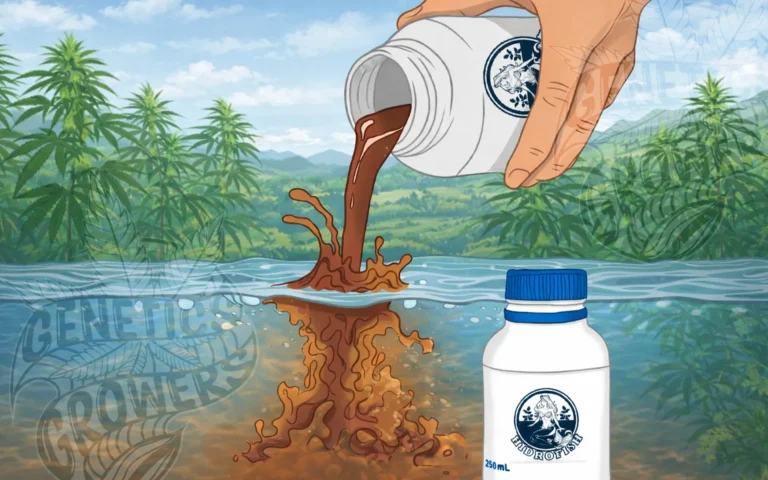
Waste management remains one of the major environmental challenges within the agri-industrial sector. However, when approached through the lens of the circular economy, these byproducts can be transformed into high-value agricultural inputs. This is the case of Hidrofish, a Colombian company that converts aquaculture waste into organic fertilizers through hydrolysis processes, with increasingly relevant applications in cannabis cultivation.
We spoke with Diego Naranjo, CEO of Hidrofish, about the origins of the project, its impact on plant nutrition, the role of amino acids in cannabis development, and the regulatory barriers facing agricultural innovation in Colombia.
This article is part of an editorial series focused on plant nutrition, applied genetics, and sustainability in modern cultivation systems.
From Aquaculture to Circular Economy
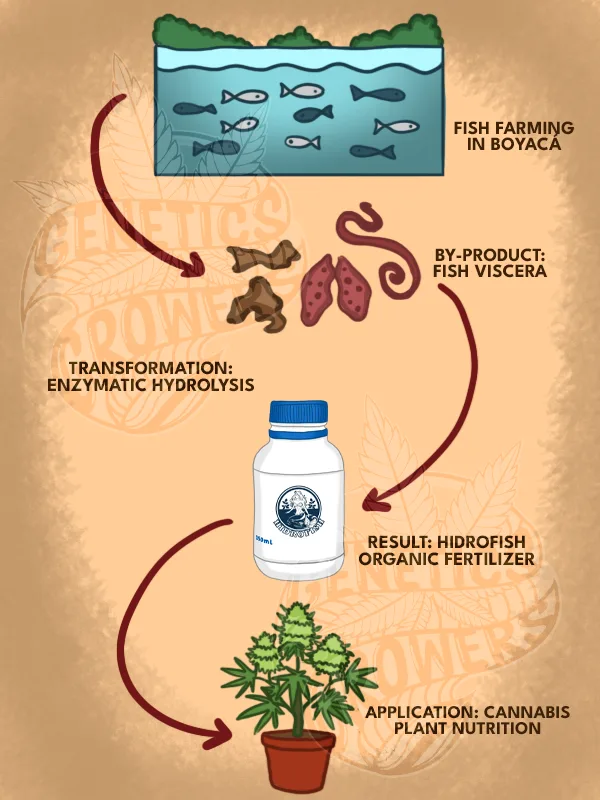
Hidrofish originated as a spin-off from a family-owned aquaculture company operating in Boyacá since 2005. What initially represented a challenge—the management of fish viscera—became an opportunity to develop a more sustainable production model.
For years, improper disposal of these residues has caused significant environmental impact. Faced with stricter environmental regulations and the need for responsible waste management, the Hidrofish team decided to transform this byproduct into a functional agricultural input, reducing waste and closing the production cycle.
“The aquaculture industry has a serious waste problem. Circular economy isn’t a slogan—it’s an operational necessity,” Diego explains.
What other agricultural by-products could become high-value inputs if similar circular economy models were applied?
Hydrolysis: Turning Waste into Plant Nutrition
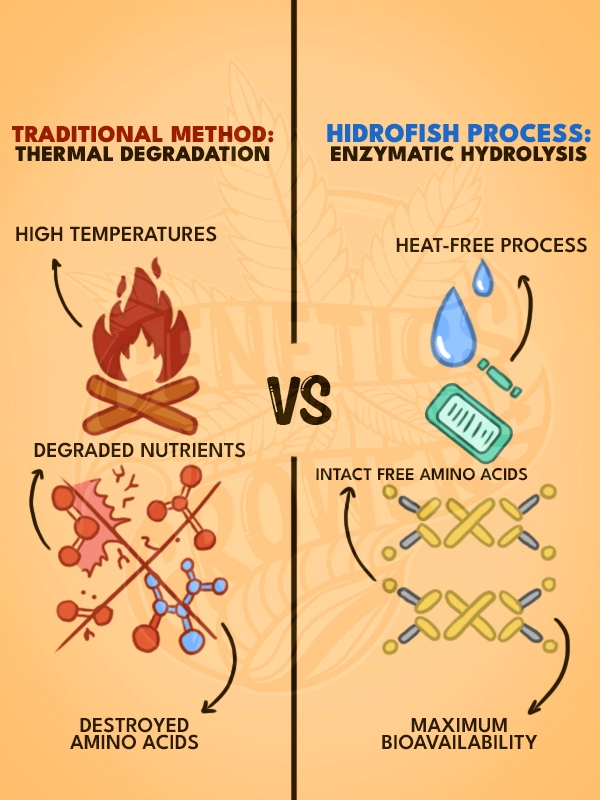
Unlike other fish-based products, Hidrofish uses a hydrolysis process without temperature delta, allowing proteins to be broken down into their most bioavailable form: free amino acids. This method avoids thermal degradation of nutrients and significantly reduces processing time—from several months to just a few weeks.
The result is an organic fertilizer rich in amino acids, nitrogen, calcium, and micronutrients, designed to act as a fertilization enhancer, rather than a replacement for traditional macronutrients.
“Amino acids don’t replace phosphorus or potassium, but they make their application far more efficient,” Diego notes.
Understanding how these processes work is key to making better-informed decisions about plant nutrition and soil management.
Why Has Cannabis Adopted Hidrofish?
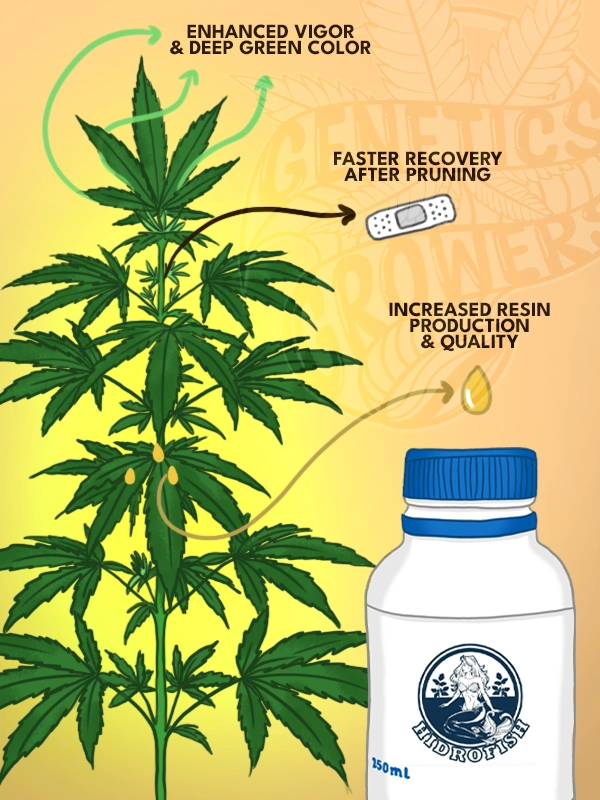
One of the most striking aspects of the project is its rapid adoption by cannabis cultivators, particularly those with a technical and experimental approach. According to Diego, while traditional agricultural producers tend to be more resistant to change, cannabis growers better understand the value of amino acids and advanced nutrition.
In cannabis cultivation, Hidrofish is primarily used during the vegetative stage, where its nitrogen and calcium content supports structural growth. Additionally, amino acids contribute to:
- Greater vigor and deep green coloration
- Faster recovery after pruning or training
- Improved turgor and resistance to thermal stress
- Increased resin production and quality
“Cannabis responds extremely well because it’s a crop that demands nutritional precision. Amino acids make a real difference.”
Explore more content on plant nutrition and applied genetics in our blog to understand how these principles apply across specialized crops.
A Key Fertilization Adjuvant
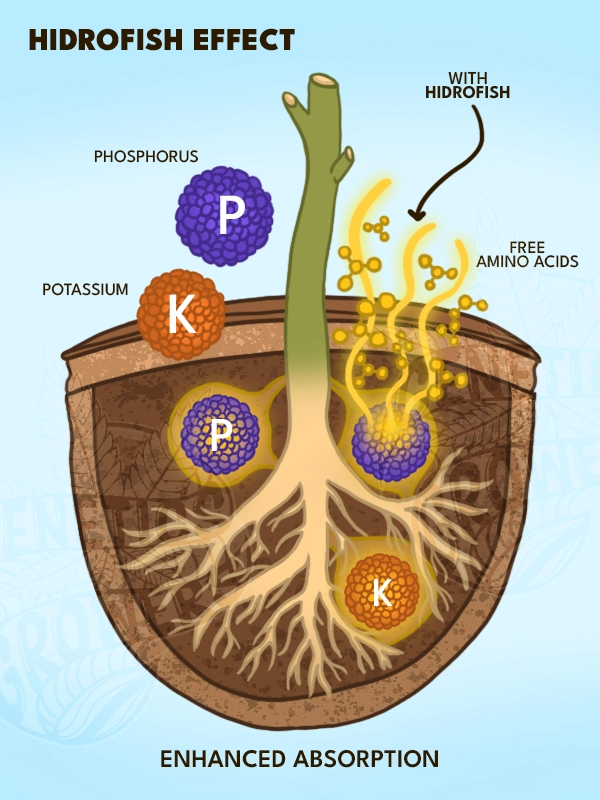
Beyond direct nutrition, Hidrofish functions as a fertilization adjuvant in nutrient programs and phytosanitary management. By improving nutrient assimilation, it enhances the effectiveness of phosphorus, potassium, and disease-control products.
Diego summarizes it with a simple analogy:
“It’s like using premium fuel with an additive—the engine performs better.”
Efficiency in nutrient uptake is one of the most critical factors in the productivity and sustainability of cultivation systems.
Application Guidelines: pH, Use, and Storage
One of the most emphasized aspects of Hidrofish is pH monitoring. As a naturally acidic product, it is essential to adjust and measure pH before and after application, whether used in irrigation or foliar sprays.
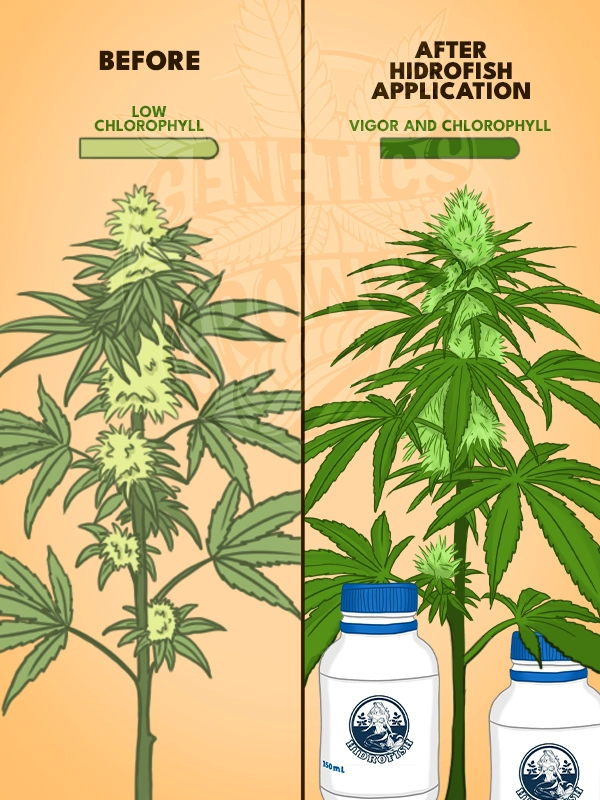
Visible effects after application may include:
- Deeper green coloration within days
- Increased plant rigidity and firmness
- Accelerated recovery from mechanical stress
- Improved tolerance to low temperatures
Regarding storage, the product should be kept in cool, shaded conditions. Interestingly, its stability improves over time, maintaining its properties in a way similar to controlled fermentation processes.
Correct application is just as important as formulation. Measuring and understanding inputs remains an essential practice.
Regulatory Barriers: Innovating in Colombia
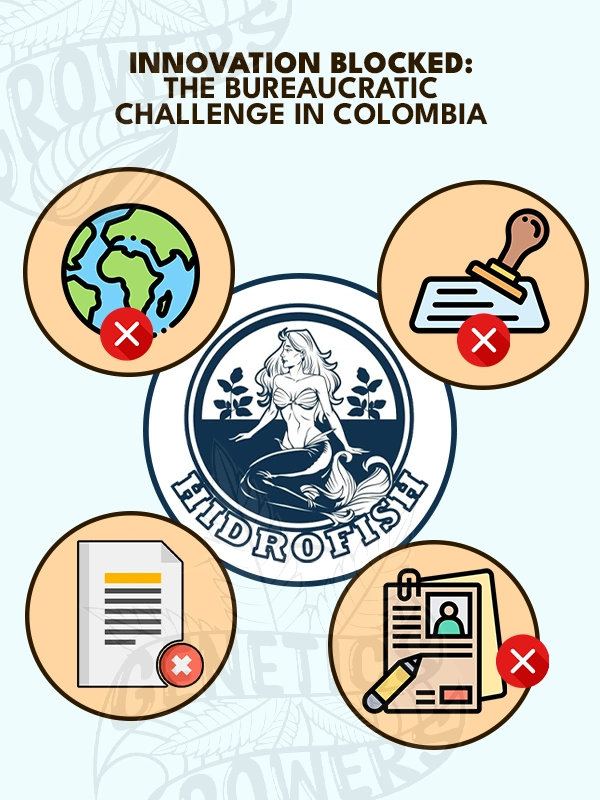
Despite technical validation and successful use across multiple crops, Hidrofish has faced significant regulatory challenges in Colombia. While similar products are classified as organic fertilizers in countries such as Mexico and the United States, in Colombia its registration has been limited to the category of soil amendment.
This situation restricts not only commercialization but also export opportunities and project scalability.
“The issue isn’t technical—it’s bureaucratic. Innovating in Colombia is still an uphill battle,” Diego explains.
How do these regulatory barriers affect the development of sustainable solutions and the competitiveness of the national agricultural sector?
Toward a More Sustainable Agriculture
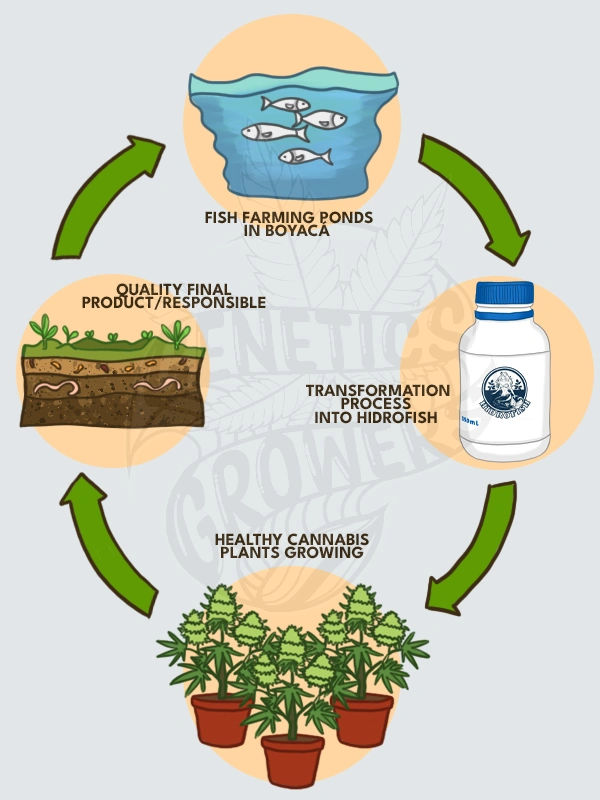
Hidrofish’s final message is clear: the transition toward organic fertilizers is not only possible, but necessary. Testing new solutions—even on a small scale—can make a meaningful difference in both productivity and sustainability.
“Using an organic, locally produced input that doesn’t damage the soil is a long-term decision,” Diego concludes.
Continuing to explore sustainable alternatives is essential for building more resilient and responsible agricultural systems.
Editorial Closing
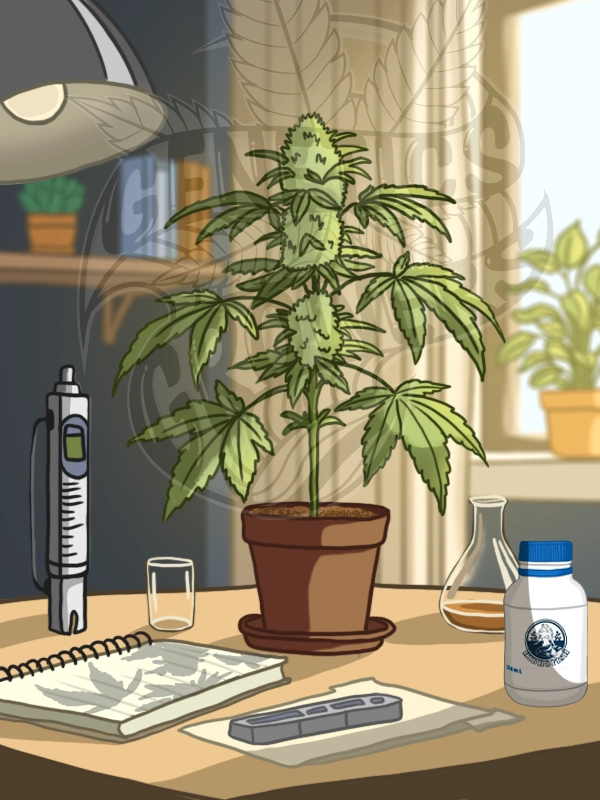
Cases like Hidrofish demonstrate that agricultural innovation does exist, even in contexts where regulations and governmental limitations pose constant challenges. Around the world, more efficient methodologies are beginning to make a meaningful difference compared to traditional agricultural systems, prioritizing approaches that respect and work with natural processes.
When applied responsibly and guided by expert knowledge, these practices become part of a synergistic ecosystem that not only supports plant resilience and optimal crop development, but also reduces environmental impact. Experimenting, innovating, and testing solutions at smaller scales—even from a home garden—are tangible ways to contribute to building a more conscious, sustainable agricultural environment aligned with nature.
About the Interviewee
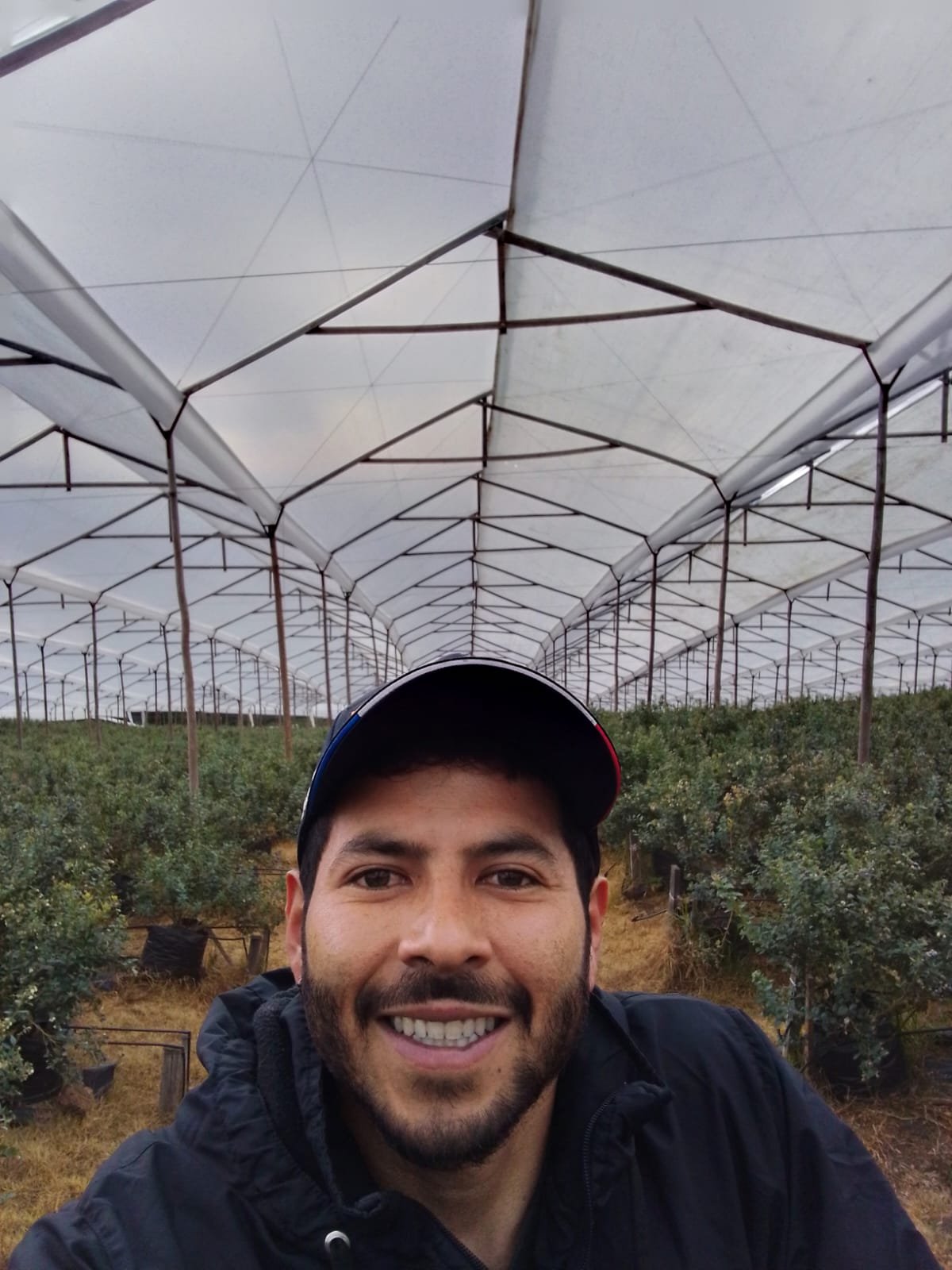
Diego is the CEO of Hidrofish, a Colombian company dedicated to the development of organic fertilizers derived from aquaculture byproducts, with a strong focus on circular economy, agricultural innovation, and advanced nutrition for crops such as cannabis.
If a process’s byproducts can fuel the next, why are we still labeling them as ‘waste’?
Every day is a battle; I hope for peace in 2026.