

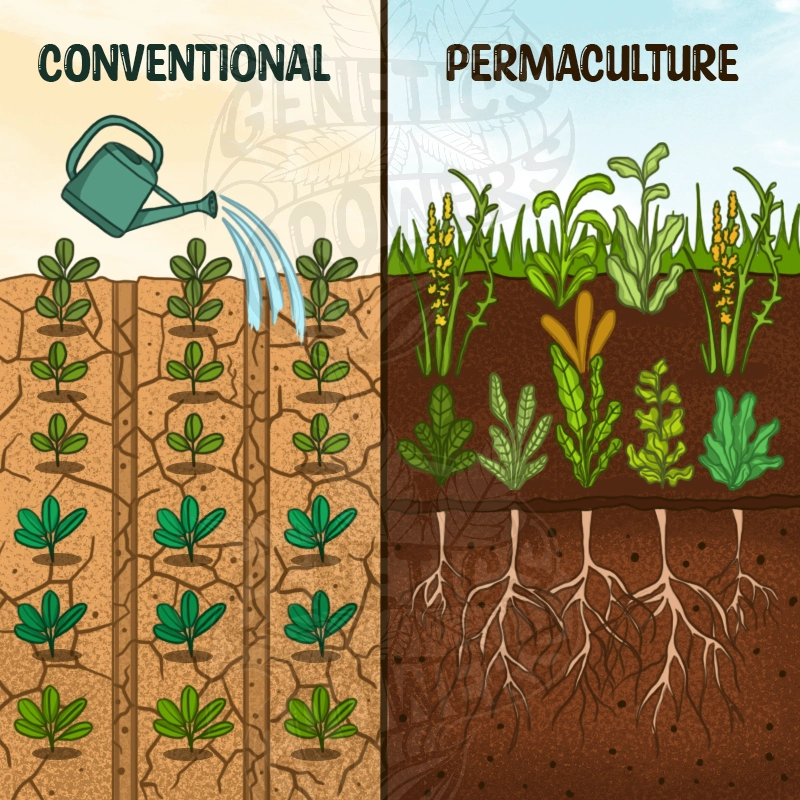
Imagine a garden where nature does most of the work for you. This is not just a dream—it is the essence of permaculture design principles. These principles are reshaping sustainable gardening by offering a harmonious way to work with nature rather than against it. Whether you are a beginner or an experienced grower, understanding and applying permaculture can transform your garden into a productive, resilient, and environmentally responsible system.
At Genetics Growers, we believe in empowering individuals through innovative cultivation strategies. Our mission is to create a community where growers can learn, experiment, and share knowledge across all areas of agriculture. Permaculture aligns perfectly with this vision, as it promotes a deep understanding of natural processes that lead to more resilient plant growth and well-balanced natural systems.
Why should permaculture matter to you? These principles not only increase garden productivity but also reduce dependence on external inputs such as synthetic fertilizers and excessive irrigation. By focusing on soil health, water efficiency, and biodiversity, permaculture helps create systems that are both sustainable and regenerative (Mollison, 1988).
In this article, we explore the core principles of permaculture design and how to apply them in real-life gardening scenarios. From observing your local ecosystem to designing efficient water systems, you will discover practical strategies to support a more sustainable future.
Foundational Principles Behind Permaculture-Based Garden Design

Permaculture design principles form the foundation of sustainable gardening by emphasizing balance and cooperation with natural ecosystems. These principles are guided by three ethical pillars: care for the earth, care for people, and fair share, which promote systems that are productive, ethical, and resilient (Permaculture Institute, n.d.).
At its core, permaculture recognizes nature as the most effective teacher. By observing natural patterns, gardeners can design systems that require less intervention while producing greater yields. This approach supports biodiversity, improves soil structure, and enhances long-term sustainability (Ferguson & Lovell, 2014).
Ethics of Permaculture: Care for the Earth, People, and Fair Share
The ethics of permaculture translate directly into actionable gardening practices. Care for the earth emphasizes preserving soil, water, and ecosystems through organic techniques such as composting and mulching. Care for people focuses on food security and community well-being, while fair share promotes the redistribution of surplus resources to ensure equitable access (Holmgren, 2002).
Observing Natural Systems: Learning from Nature
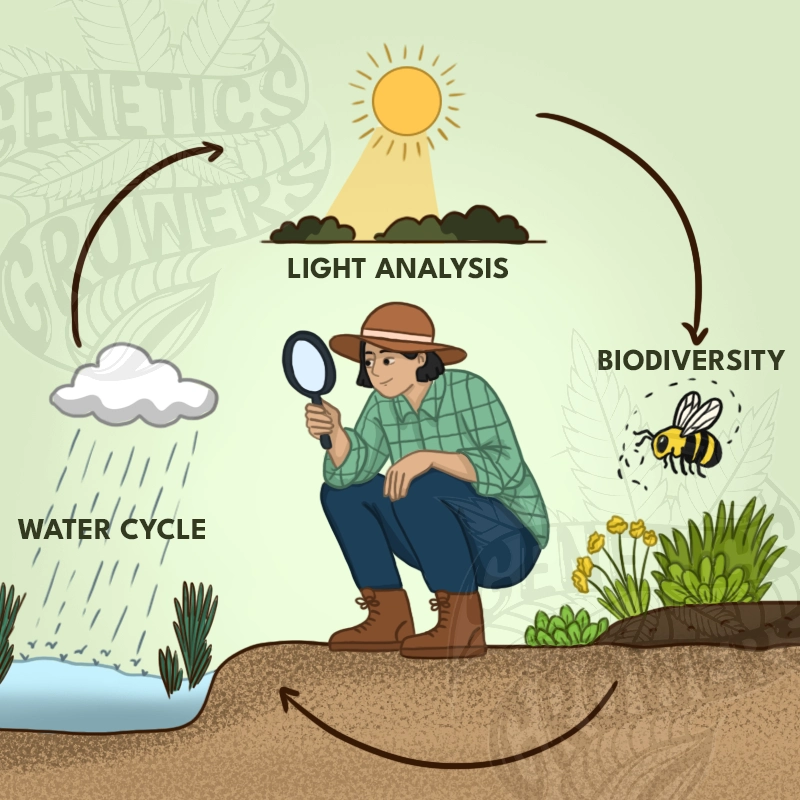
Observation is a cornerstone of permaculture design. By studying natural ecosystems, gardeners can replicate processes such as nutrient cycling and water retention. Understanding water flow across a landscape allows the implementation of rainwater harvesting systems that reduce irrigation demands and improve soil moisture retention (World Permaculture Association, n.d.).
Similarly, observing plant interactions enables effective companion planting, which enhances crop productivity, reduces pest pressure, and promotes biodiversity through beneficial insect attraction (Altieri, 1999).
Guiding Principles That Shape Permaculture Design
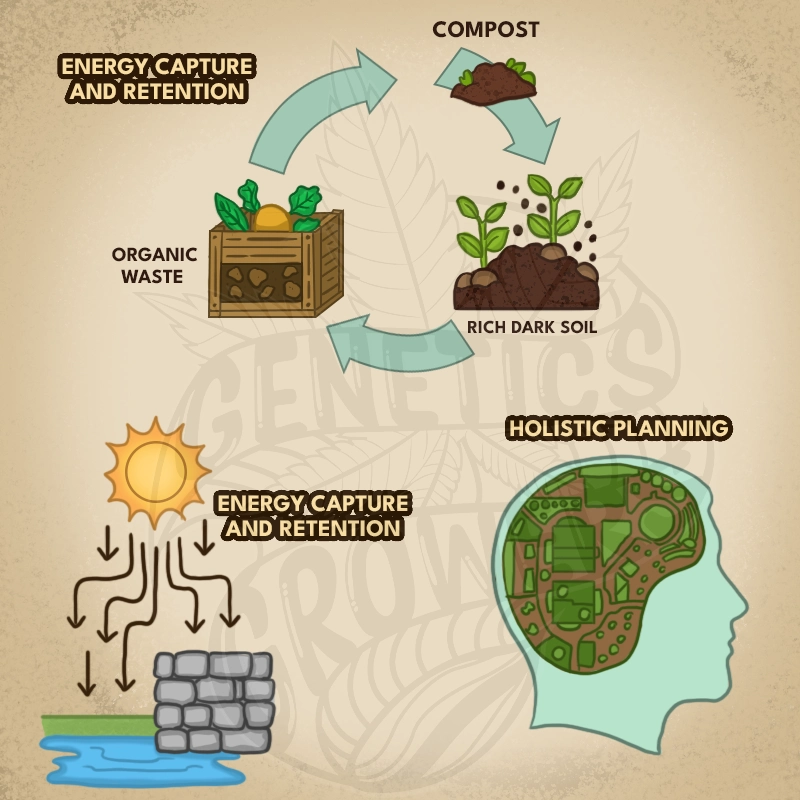
Rather than rigid rules, permaculture relies on a set of guiding principles that help gardeners make informed and sustainable design decisions. Among the most influential are:
- Active Observation and Engagement: Understanding environmental conditions before intervening.
- Energy Capture and Retention: Designing systems that efficiently collect and store sunlight, water, and organic matter.
- Purposeful Productivity: Ensuring that each element within the system provides meaningful value.
- Adaptive Management: Adjusting practices based on feedback and long-term outcomes.
- Responsible Use of Renewables: Prioritizing materials and resources that can be naturally replenished.
- Waste Reduction by Design: Transforming by-products into useful inputs within the system.
- Holistic Planning: Developing designs by recognizing broader patterns before refining specific details.
For more sustainable gardening insights, explore additional resources on Genetics Growers.
Designing a Permaculture Garden: Practical Steps
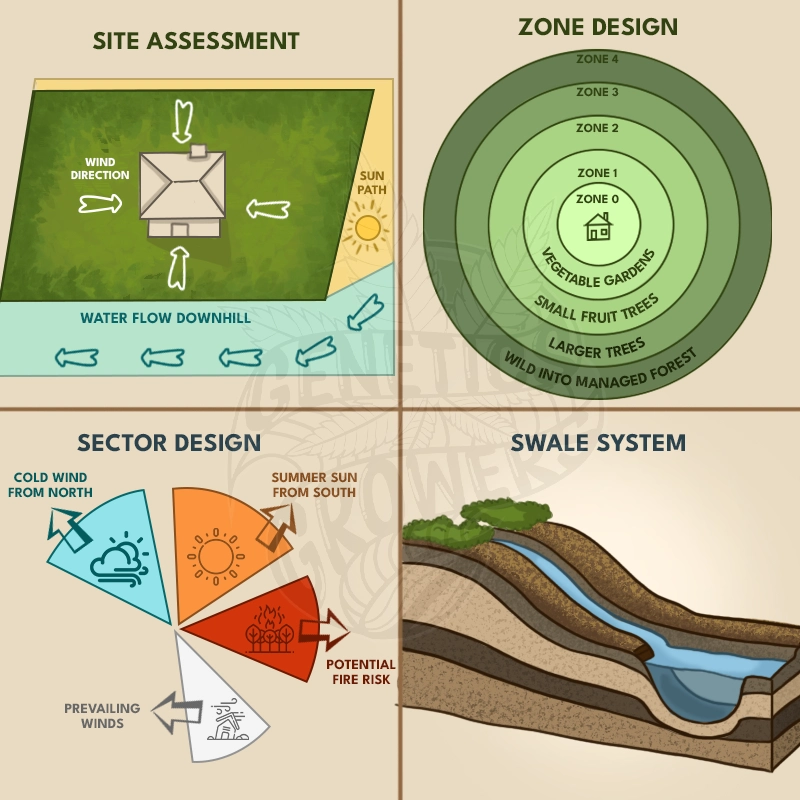
Designing a permaculture garden combines ecological awareness with strategic planning. Whether starting from scratch or adapting an existing space, thoughtful design minimizes environmental impact while maximizing productivity.
Evaluating Site Conditions Before Designing Your Garden
Before planting, gardeners should assess sunlight exposure, wind patterns, soil conditions, and water movement. Tools such as zone and sector analysis help position elements efficiently, reducing labor and improving long-term garden performance (Permaculture Institute, n.d.).
Designing with Zones and Sectors
Permaculture zones organize space based on frequency of use, placing high-maintenance plants near the home and low-maintenance systems further away. Sector planning accounts for natural forces like wind and sunlight, guiding the placement of windbreaks and shade structures (Mollison, 1988).
Implementing Sustainable Practices
Soil vitality plays a central role in the success of any permaculture system. Composting, mulching, and cover cropping improve fertility and water retention. Water-management techniques such as swales slow runoff, increase infiltration, and reduce erosion, making them essential tools for sustainable gardening (Food and Agriculture Organization of the United Nations [FAO], 2017).
Biodiversity remains central to permaculture success. Polycultures and companion planting strengthen ecosystem resilience and naturally suppress pests (Altieri, 1999).
Explore more practical guides and tools on Genetics Growers.
Integrating Permaculture into Everyday Gardening
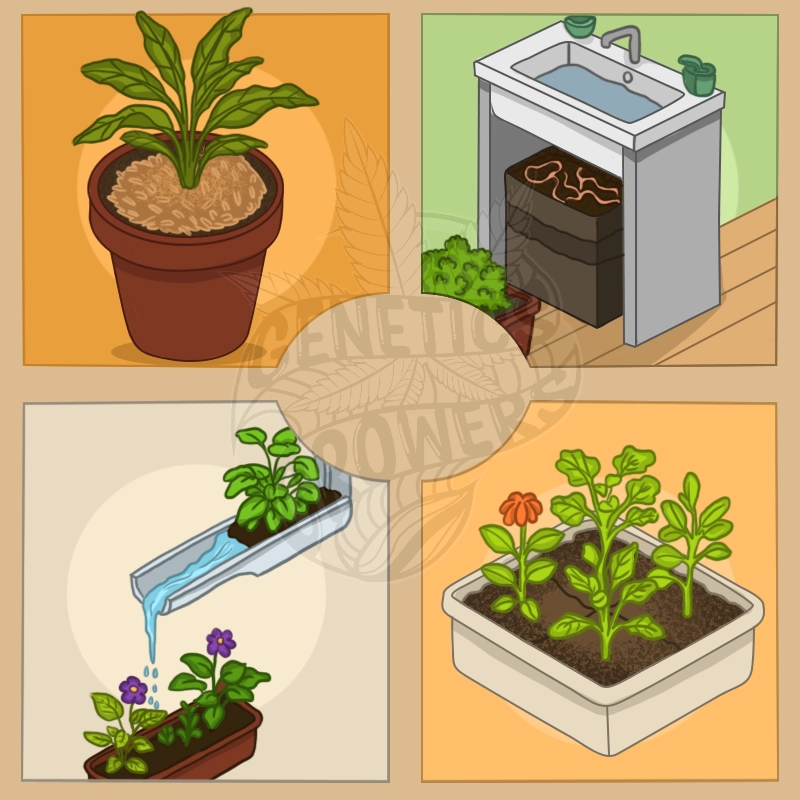
Permaculture principles are applicable to gardens of all sizes. Simple practices such as mulching, companion planting, and rainwater harvesting can significantly reduce maintenance while improving ecological balance.
Companion Planting: Enhancing Growth and Biodiversity
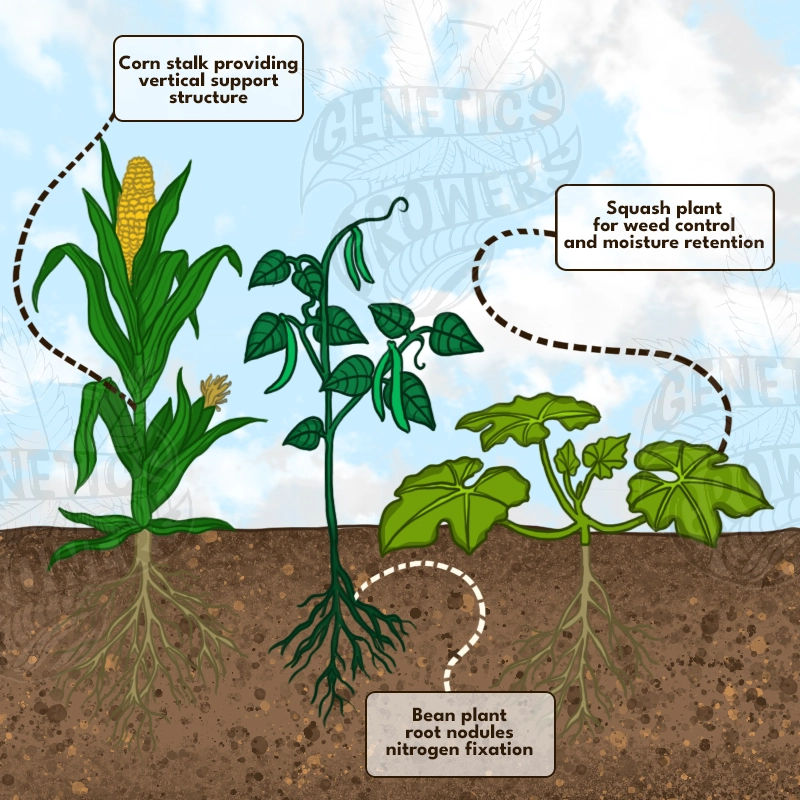
Companion planting relies on beneficial plant relationships that enhance nutrient availability, deter pests, and increase yields. This practice supports biodiversity and creates more resilient agroecosystems (Altieri, 1999).
Managing Water Responsibly Within Sustainable Garden Systems
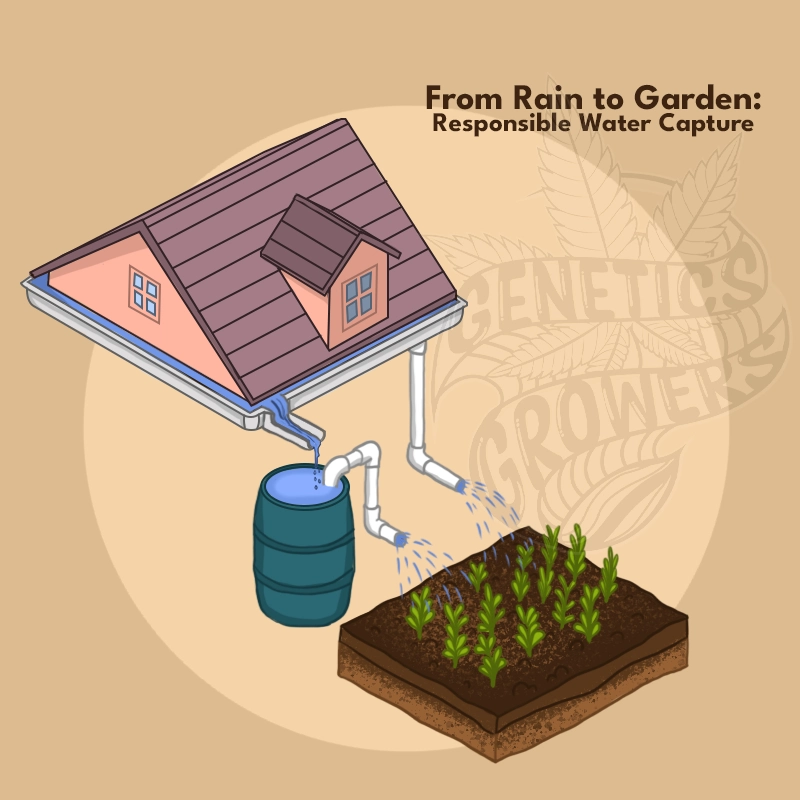
Responsible water management plays a key role in long-term sustainable gardening practices. Rainwater harvesting systems and swales help retain moisture, prevent erosion, and reduce dependence on irrigation, particularly in water-scarce regions (FAO, 2017).
Embracing Permaculture for a Greener Future

Permaculture provides a practical and ethical framework for sustainable gardening. By adopting its principles, gardeners can create productive systems that thrive with minimal intervention.
Joining learning communities such as Genetics Growers offers continued support, inspiration, and shared knowledge.
Share your experiences and explore more sustainable gardening resources on Genetics Growers. By working collectively, we can contribute to a more sustainable and resilient future.